
The Spirit in the Archipelago: Rethinking Pentecostal Theology from the Caribbean
Pentecostalism is one of the fastest-growing movements in world Christianity, yet much of what is written about it is shaped far from the places where it is lived. In the Caribbean, the Spirit is experienced in established churches and independent fellowships alike, on islands whose histories include colonial rule, slavery and indenture. Our first journal issue begins from that ground. This post previews the questions it will pursue.
Why the Caribbean?
A Caribbean Pentecostal theology cannot start in the abstract. It has to reckon with colonial legacies and the afterlives of slavery and indenture, and with how the Spirit is encountered in everyday worship, not only in formal doctrine. As one line from the issue's framing puts it:
The Spirit does not speak only in the language of the metropole; the Spirit also sings in the rhythms of the islands.
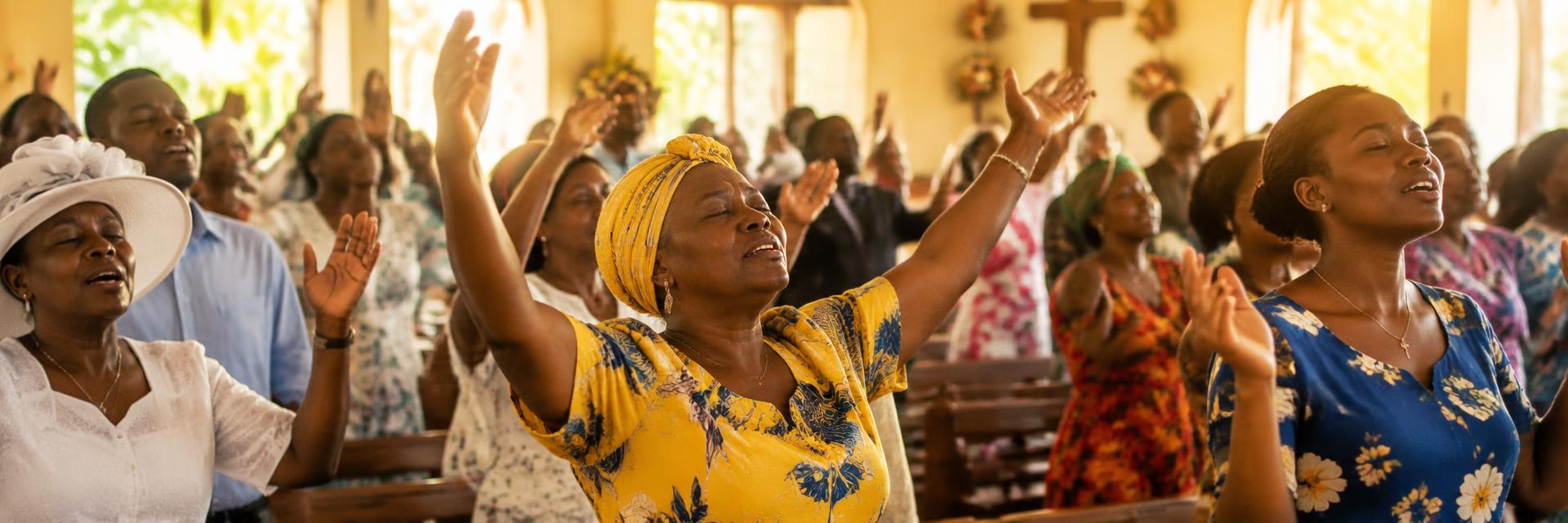
That gap between where theology is written and where faith is practised is what the issue sets out to address. In congregations from Kingston to San Juan, spontaneous prayer traditions and communal testimonies operate as theology in action, resisting European colonial categories while speaking directly to local hardships.
What is still unanswered
Two questions run through the issue, and both are still open.
First, how do we build a pneumatology, a theology of the Spirit, that is honest about both doctrine and context? Pentecostal tradition places a classical emphasis on Spirit baptism. The islands also have social, economic and political realities that shape what that experience means. Quiñones-Román's “Toward a Caribbean Pneumatology” (forthcoming) offers an early framing, and the issue builds on it.
Second, what does bilingualism offer theological method? The Society works in English and Spanish as a matter of principle. Moving between languages may change how the Spirit is heard, and what counts as theology in the first place. Contributors explore how theological terms shift when translated between English and Spanish, revealing insights lost when discourse is restricted to a single imperial tongue.
Why it matters
If the Spirit does not speak only in the language of the metropole, then the questions Caribbean communities bring to theology are not local variations on a settled story. They are part of how the story is told. It moves Caribbean scholarship from the margins to the centre, demonstrating that island pneumatologies offer vital contributions to global Christian theology.
Join the conversation
We invite scholars, ministers and graduate researchers to take part through the journal, the inaugural conference in San Juan, and the Society's ongoing work. Early-career writers may also be interested in the 2025–26 SCPT Essay Prize.
Sources: The Society's working papers (2025–26) on the historical complexity of Caribbean Christianity · Quiñones-Román, “Toward a Caribbean Pneumatology” (forthcoming) · Society language policy